Collaborative software engineering

LusoHealth

A five-person academic digital-health platform for appointments, user workflows, communication, and clinical-support features.

My role
Frontend and backend contributor
Context
Five-person team project · shared Git workflow
Period
January–May 2024
Status
Completed academic project · source available
  • .NET 8
  • ASP.NET Core
  • Angular 17
  • TypeScript
  • SQL Server
  • Entity Framework Core
LusoHealth project banner with healthcare interface symbols
Healthcare visual used by the LusoHealth client application.
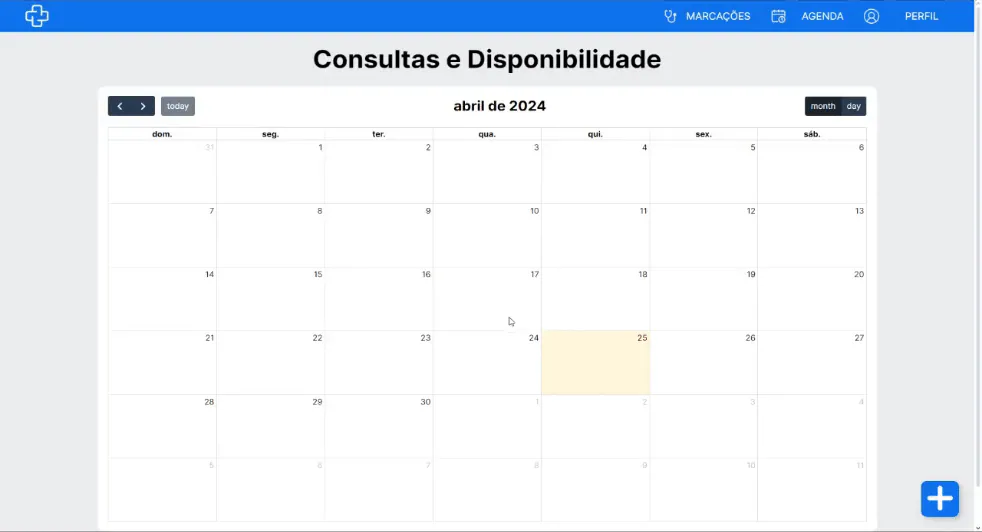
LusoHealth professional agenda showing a monthly availability calendar with fictional demonstration data
Professional agenda and availability workflow using fictional demonstration data.

01 · Overview

Project overview

Academic prototype using fictional demonstration data. LusoHealth is not a live healthcare service.

LusoHealth was built as a shared academic client-server project. The repository combines an Angular client with an ASP.NET Core API and SQL-backed data layer.

I worked on the project in a five-person team using a shared Git workflow.

02 · Project scope

Project-wide capabilities

  • User management, appointment scheduling, agendas, consultation history, chat, reviews, reports, and moderation workflows.
  • Layered backend organised around controllers, services, data access, DTOs, and models.
  • Identity and JWT authentication, Entity Framework Core migrations, Swagger, and real-time SignalR communication.
  • Angular Material, Bootstrap, RxJS, Chart.js, FullCalendar, and Google Maps integrations.

My role

My verified contributions

  • Built patient agenda and consultation-history interfaces, completed chat and reports frontend work, and contributed appointment and moderation backend functionality.
  • Implemented reports routing, formatting and CSS work, including rating-related fixes.
  • Worked in a five-person team using ASP.NET Core, Angular, Entity Framework Core, SQL Server, SignalR and a shared Git workflow.

Team context

Credits and team roles

Project roles and team-created work are listed alongside my individual contribution.

  • Five-person university development team working through a shared Git repository.
  • Role: Angular and ASP.NET Core contributor.
  • All users, appointments, uploads, clinical information, and records shown in the prototype are fictional demonstration data.

03 · Team and Git workflow

Five-person development workflow

The project combined defined feature work with a shared main branch and cross-layer integration.

  • Developed within a five-person team using a shared Git workflow.
  • Coordinated related Angular and ASP.NET Core changes across the shared client-server codebase.

04 · Decisions

Architecture and technical decisions

How the project structured its systems, interactions, and delivery constraints.

Layered server structure

Controllers, services, DTOs, models, and data access were separated to keep API responsibilities explicit across a large shared codebase.

Client-server separation

The Angular application and ASP.NET Core API were maintained as distinct application layers with typed client services mediating requests.

Real-time communication

SignalR supported chat-related project capabilities while the rest of the platform used REST-style API endpoints.

05 · Problem solving

Challenges and responses

Concrete constraints are paired with the implementation or design response used in the project.

Challenge

Coordinating changes across related frontend and backend workflows in a shared repository.

Response

Worked through scoped Angular and API changes within the team’s Git workflow, keeping DTOs, controllers, and client services aligned.

Challenge

Keeping a broad healthcare feature set understandable.

Response

Used routed feature areas and a layered API structure to organise appointments, communication, reports, and moderation.

06 · Iteration

Testing and iteration

  • The backend includes xUnit, Moq, and Coverlet as project-wide testing infrastructure.
  • Swagger / Swashbuckle is included for API documentation and endpoint inspection.

07 · Project technologies

Shared application stack

The backend, frontend, and testing stack used across the five-person project.

Backend

  • .NET 8
  • ASP.NET Core Web API
  • Entity Framework Core
  • SQL Server
  • Migrations
  • ASP.NET Core Identity
  • JWT authentication
  • SignalR / Azure SignalR
  • Swagger / Swashbuckle

Frontend

  • Angular 17
  • TypeScript
  • Angular Material
  • Bootstrap / Bootswatch
  • RxJS
  • Chart.js
  • FullCalendar
  • Google Maps APIs

Testing

  • xUnit
  • Moq
  • Coverlet

What I learned

What the project changed

  • How feature work crosses Angular components, typed services, API contracts, and persistence layers.
  • How to coordinate cross-layer feature work within a multi-author repository.

Future pass

What I would improve

  • Add a maintained setup guide and sanitised demo environment for faster local setup.
  • Move environment-specific service configuration into documented local secrets and deployment settings.
  • Document contribution ownership and testing responsibilities more explicitly.

Related work